
 Saba News News and Information from Saba Island, Dutch Caribbean
- October 26, 2026
Alto de Pacho is back on Saturday 21 November.

Alto de Pacho is back on Saturday, 21 November. Three kilometers, 344 meters of climbing, and 12.5 percent on average. Short, steep, and spicy, and the clock does not care how you get up there. What: solo bike time trial, riders start one at a time, all bikes welcome When: Saturday, 21 November, briefing 15:45 at Cove Bay School, first rider at 16:00 Where: Cove Bay up to Zion’s Hill, finish near Pacho’s Entry: $20, including a drink and a snack at Pacho’s afterwards. Pay online by 31 October. Sign up here: https://www.event66.nl/alto-de-pacho/ Together with Saba Triathlon Foundation. Most people stay for drinks and some music at Pacho’s after, which is the real finish line. Also coming up: Sea to Scenery on 5 December, run or walk from the sea at Cove Bay to the top of Mount Scenery: https://www.event66.nl/sea-to-scenery/ Hope to see you at the start! Sporty greetings/Sportieve groet, Jochem www.event66.nl
- October 26, 2026
Democracy Academy presents a Three-Day Journey into Civic Life
Have you ever wondered how decisions are made on our island? Do you have ideas for improving your community but aren’t sure how to make them happen? Or perhaps you are simply curious about the mechanics of government and democracy on Saba? The Netherlands Institute for Multiparty Democracy (NIMD) is inviting the Saban community to pull up a chair and join the conversation at the upcoming Democracy Academy Saba. Set to take place from November 9 – 11, 2026, this three-day event promises to be an engaging deep dive into the heart of civic life. The sessions will run each evening from 6:00 p.m. to 9:00 p.m., offering a perfect after-work opportunity to learn, connect, and grow. Three Days. Three Themes. One Journey. Under the theme “Three Days. Three Themes. One Journey,” the Academy is designed for everyone—not just those considering a run for public office. Whether you are a seasoned community advocate, someone looking to become more politically active, or a resident who just wants to understand how the system works, there is a place for you here. The Academy aims to provide practical skills, a space for critical questions, and a deeper understanding of how community concerns can become policy. Day 1: Campaigning, Elections & Political Participation The journey kicks off on Monday, November 9, at the Eugenius Johnson Center. The first session will focus on campaigning, elections & political participation. Participants will explore how elections and campaigns function, and, crucially, how they can transform community concerns into political action. It is an opportunity to look behind the curtain of the electoral process and understand how every voice counts. Day 2: November 10: How Government Works & Effective Representation Location: The Scenery Hotel Learn about the roles of the Island Council, Executive Council, and civil service; how decisions are made; and how representatives and citizens can engage with local democracy. Day 3: November 11: Dialogue, Conflict & Negotiation Location: Eugenius Johnson Center Practice listening, managing difficult conversations, negotiating, and finding common ground skills that are valuable in politics, work, and community life. Why Attend? The Democracy Academy is more than just a lecture; it is a workshop for the community. It offers a chance to develop practical skills for politics, community work, or everyday advocacy. Most importantly, it is a space to ask questions. You do not need to be a politician to participate—you just need to care about the future of Saba. Registration link: https://forms.cloud.microsoft/Pages/ResponsePage.aspx. PES

Both men convicted of killing Saba firefighter Sheldon Johnson have appealed their verdicts, insisting they had no part in the crime. The case was not heard on its merits during Thursday’s pro forma hearing, which focused on scheduling and on where the full appeal should be held. What happened at the hearing? At the pro forma hearing on Thursday, October 8, both convicts confirmed that they stand by their claim of innocence and reject the court’s judgment. The session dealt with procedure only, setting out the next steps in the case. In the first instance, the court sentenced A.N.W. to 28 years in prison and R.V.v.H. to 21 years for their roles in Johnson’s murder. W. was also found guilty of the attempted murder of Carti, Johnson’s partner, and of drug possession. A hearing spread across four islands As in the first instance, the hearing was largely conducted via video link. The three judges of the Court of Justice sat in Curaçao, while the Attorney General and the defense lawyer joined from Sint Maarten. Both convicts attended from Bonaire, and courtrooms on Saba and Sint Maarten were also connected. Why the court convicted them The appeal will re-examine the role each man played in the fatal shooting on Saba on September 12, 2025. During the trial, both men denied any involvement, claiming they had only seen a mysterious “shadow man.” The court didn’t accept that account. It ruled that the figure on the camera footage was W., noting that gunshot residue was found on his clothing, backpack, and glove. The court also rejected the idea that V.v.H. had merely offered help after the fact. In its view, the two men acted together and coordinated their actions. Where will the appeal be heard? The location of the full hearing remains undecided. The wish to hold it on Saba came up again, and the Court said it understands the arguments and wishes of those involved. Holding the hearing on Saba is possible in theory, but the court said safety concerns, among other factors, make it a less favored option. Before choosing, the Court wants to gather more input from the parties. The location matters especially to Johnson’s next of kin, who have said they want to attend in person rather than follow the trial by video. What comes next December 10, 2026: Another pre-trial hearing, by which time the parties must have developed their wishes and any investigative plans. Spring 2027: The tentative window for the substantive appeal hearing, at a location still to be decided. Until then, the position of the two convicts is clear: they say they are innocent and will keep fighting their convictions.
- October 25, 2026
Caribbean Netherlands immigration chain looks ahead
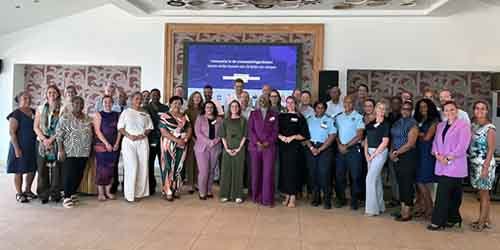
How can the immigration chain in the Caribbean Netherlands cooperate better, work smarter and deploy new technology responsibly? Those questions were the focus today of the annual Caribbean Netherlands immigration chain mini conference on Bonaire. Representatives of the organisations involved looked back on the development of the chain, discussed the current cooperation and explored opportunities to further strengthen the joint performance of tasks. Director-General of the Migration Chain Esther Pijs and Island Governor John Soliano were also present as speakers. The mini conference was devoted to looking ahead with attention to the past, by reflecting on the launch of the immigration chain in the Caribbean Netherlands on 10-10-10. In this context, attention was given to new ways of cooperating, the possible deployment of external parties and the opportunities that technological developments offer for the day-to-day practice of the immigration chain. From a shared history to a future-oriented chain During the meeting, the development of the immigration chain in the Caribbean Netherlands was reviewed, including with reference to the theme ‘Moving Forward Together’ from the 2025 mini conference. The progress of the actions formulated during previous meetings was also discussed. With the presentation ‘From 10-10-10 to Tomorrow’, the participants looked at the development of the chain since 10 October 2010, the current state of affairs and the challenges for the future. Contributions from, among others, Jonathan Johnson, the former Island Governor of Saba, Statistics Netherlands and the Ministry of Justice and Security provided starting points for further exploring the shared challenges. Innovation as an opportunity for implementation Innovation also received particular attention. Guest speakers from the Immigration and Naturalisation Service (IND) and the SBIR Programme addressed developments concerning artificial intelligence (AI) and chat functionalities in work processes. The participants also discussed the possible application of new technologies, such as AI, drones, algorithms and biometric identification. The central question was how these developments can contribute to more effective work processes and better performance of the joint tasks. Cooperating across organisational boundaries In interactive breakout sessions, the participants held discussions with one another on three themes: new ways of working and integrated partnerships, the deployment of external private parties, and the application of new technologies. In this way, it was explored how more intensive exchange of information and other forms of cooperation can strengthen the chain. The participants also discussed opportunities to involve external organisations, such as civil-society organisations or private service providers, in specific work processes. The sessions provided scope to exchange experiences, explore opportunities and formulate ideas for the further development of cooperation in the Caribbean Netherlands. Continuing to build together The mini conference emphasised the importance of a shared view of the future. The challenges within the immigration chain call for good coordination, clear cooperation and a willingness to explore new possibilities. The day concluded with a joint review of the outcomes of the meeting. Through the annual mini conference, the organisations involved continue to work towards an aliens chain in which cooperation, knowledge sharing and innovation contribute to the effective performance of the joint tasks in the Caribbean Netherlands. This year, the conference was organised on Bonaire by the Repatriation and Departure Service, the Royal Netherlands Marechaussee, IND CN and the Migration Policy Department of the Ministry of Justice and Security.

PUBLIC NOTICE The Central Committee of the Public Entity Saba hereby cares to inform the public that there will be a Central Committee meeting on Monday, October 26th, at 2:00 pm at the Government Administration Building. You may also view the Central Committee meeting on the Saba Island Council website and the Saba Government YouTube page. The agenda is as follows: 1. Opening and announcements 2. Approval of the agenda 3. Approval of the minutes from the Central Committee Meetings on April 21st, May 26th, June 23rd, and August 27th, 2026 4. Citizens right to speak on agenda points 5.Oral Question round: concerning announced questions from Island Council incoming correspondence list during the period May 30th, 2026 – August 14th, 2026 (Article 18) 5.1 Island Council incoming and outgoing correspondence list -Executive Council letter# 204/2026 pending commitments (June 2nd, 2026) -Public Transportation Plan 5.2 Executive Council decision list 5.3 Written questions to the Executive Council (article 35) 5.4 Answers to written questions to the Executive Council (article 35) 6.Island Council Proposal 2026.6: Island Ordinance Audit Chamber Saba 7.Update: Governing Execution Plan 8.Island Council Proposal 2026.7: Multi-Annual Budget 2027-2031 9.Closing Looking forward to your attendance. Sincerely, The Island Registrar, Akilah M. Levenstone The Chairlady of the Central Committee, Elsa O.F. Peterson Note: The general public is allowed to examine the documents on the agenda for the abovementioned Central Committee meeting, at the Office of the Island Registrar which is located in the Government Administration Building. If you have any questions, please free to contact the Island Registrar (Akilah M. Levenstone) at akilah.levenstone@sabagov.nl or call 416-3311ext 202. If you want to make use of the opportunity to speak to the members of the Central Committee at this meeting you have to inform the Island Registrar at least 48 hour before the meeting in order for the Registrar to explain the rules of the meeting and process your request. The general public is welcome to attend the meeting as an observer. PUBLIC NOTICE The Island Governor of the Public Entity Saba hereby cares to inform the public that there will be an Island Council meeting on Wednesday, October 28th, 2026, at the Government Administration Building at 2:00 pm. The agenda is as follows: 1.Opening and announcements 2.Approval of the agenda 3.Approval of the minutes -Island Council Meeting: April 21st, May 26th, June 23rd, June 25th and August 27th, 2026 4.Oral Question time (article 36) 5.Incoming and outgoing correspondence and announcements from August 15th, 2026 – October 9th, 2026 5.1 Island Council incoming and outgoing correspondence list -Executive Council letter# 204/2026 pending commitments (June 2nd, 2026) -Public Transportation Plan 5.2 Executive Council decision list 5.3 Written questions to the Executive Council (article 35) 5.4 Answers to written questions to the Executive Council (article 35) 6.Island Council Proposal 2026.6: Island Ordinance Audit Chamber Saba 7.Island Council Proposal 2026.7: Multi-Annual Budget 2027-2031 8.Motions 9.Closing Sincerely, The Island Governor, Jocelyn R. Levenstone PES
- October 22, 2026
Inflation up on Bonaire, Saba, down on Statia
Transport prices on Bonaire rose most in the Caribbean Netherlands during the third quarter of 2026, up by 5.8 per cent. On St. Eustatius, electricity tariffs rose by 15.2 per cent, while on Saba clothing and footwear in particular became more expensive, according to the Central Bureau of Statistics (CBS). Consumer goods and services on Bonaire were 5.9% costlier, year on year. Inflation in the second quarter was 3.3%. On St. Eustatius prices were up 4.5% year on year in Quarter 3. In Q2, inflation stood at 5.2%. On Saba, inflation was 5.2% in Q3, compared to 5.0% in Q2. Prices on Bonaire were up by 1.6% on average in Q3 2026, compared with Q2. This was mainly due to a rise in prices for transport of 5.8%. The price of petrol was up by 13%, while prices for airline tickets were up by 8.9%. Prices for electricity rose by 15.2%, but prices for water fell compared with 02. On St. Eustatius, prices were up by 0.2% in Q3 2026 compared with Q2. This was mainly due to a rise in electricity rates of 15.2%. In addition, prices for clothing and footwear increased by 4.4%. However, transport expenses were down 7.1% from Q2. This was mainly due to a fall in prices for airline tickets. Petrol, on the other hand, became 10.5% more expensive. On Saba, consumer prices were 0.1% higher in Q3 compared with Q2. Prices for clothing and footwear rose in particular. However, transport prices fell by 6.7%. This was mainly due to lower prices for airline tickets. In addition, water charges decreased, while prices for electricity remained unchanged following the introduction of a new subsidy scheme. The Daily Herald.

St. Maarten, Saba and Statia have signed a memorandum of understanding (MOU) to launch a genealogical research project examining genetic connections between the three islands and their links to Africa. Minister of Education, Culture, Youth and Sport (ECYS) Melissa Gumbs announced during her livestream MECYS Matters on Tuesday that she signed the agreement on Friday, October 16, with Saba Commissioner Everton Heyliger and Statia Commissioner Reuben Merkman. The project is one of the initiatives under the Future Routes programme, which will be executed by the St. Maarten Development Fund (SMDF) in collaboration with the Department of Culture. Gumbs said she and her co-signatories had the opportunity to hear from the researchers about their approach, how the project idea developed and what they hope to discover based on their respective areas of expertise. The research will follow two approaches, one focusing on ancient DNA and the other on modern DNA. The aim is to map genetic connections between the three islands and trace how those connections extend across the Atlantic to Africa, following the transatlantic slave trade and other patterns of human migration. Gumbs said the project could open the door to further research as the islands continue to implement initiatives under the Future Routes programme, which follows the Dutch apology for slavery. She expressed anticipation about the findings and the information the research could provide about the connections between St. Maarten and its sister islands, Saba and Statia. The Daily Herald.
- October 20, 2026
PM Mercelina seeks stronger partnerships for mental health facility serving St. Maarten, Saba, Statia
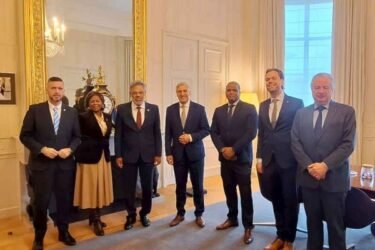
St. Maarten’s Prime Minister Luc Mercelina has discussed cooperation on a new mental health facility that will serve St. Maarten, Saba and St. Eustatius during meetings with Dutch officials in The Hague. He also discussed preparations for the upcoming Kingdom Summit. During his working visit to the Netherlands on Monday, Mercelina met with officials at the Ministry of Health, Welfare and Sport, Council of State Vice-President Sybrand van Haersma Buma, and Director-General for Kingdom Relations Barbera Wolfensberger. At the Ministry of Health, Welfare and Sport, Mercelina met with Herbert Barnard, Director of Healthcare and Youth for the Caribbean Netherlands. Their discussions focused on exchanging expertise, developing institutional partnerships and strengthening mental healthcare services. The new facility is being financed through the St. Maarten Trust Fund, with support from the World Bank, and is being implemented by the National Recovery Program Bureau (NRPB). The discussions explored opportunities to strengthen partnerships and knowledge-sharing to help ensure the facility provides accessible, quality and sustainable mental healthcare services for residents of all three islands. “Mental health is an essential component of overall health and wellbeing. Every person deserves access to compassionate, quality care close to home. Through cooperation and the sharing of expertise, we are working to strengthen mental healthcare services and create lasting benefits for current and future generations throughout the region,” Mercelina stated. Mercelina also met with Van Haersma Buma to discuss developments within the Kingdom, the importance of dialogue among the four countries and preparations for the upcoming Kingdom Summit. Their discussions covered cooperation on issues affecting citizens, including access to quality education and healthcare, public safety and security. Mercelina said the future of Kingdom cooperation should recognise the individual strengths and perspectives of each country, rather than focusing only on their similarities. “The Kingdom functions best when we engage openly, listen carefully to one another, and work together to address shared challenges. However, the future of the Kingdom should not be based only on our similarities. The strength of the Kingdom also lies in our differences and in the unique contributions that each country brings. St. Maarten’s position is that the countries of the Kingdom should be co-owners of our shared future, not merely stakeholders in it,” he said. The Prime Minister said the Kingdom Summit provides an opportunity to strengthen that sense of shared ownership while improving education, healthcare, safety and opportunities for citizens. His engagements with the Cabinet of the Minister Plenipotentiary focused on coordinating St. Maarten’s representation in the Netherlands and ensuring that ongoing initiatives remain aligned with the government’s priorities. During a subsequent meeting with Wolfensberger, discussions continued on preparations for the Kingdom Summit, cooperation among the countries and progress on the new mental health facility. Mercelina said the discussions must ultimately lead to practical benefits for the people of St. Maarten. The Prime Minister is accompanied on the working visit by Secretary-General Abel Knottnerus and Chief of Staff Stuart Johnson. Minister Plenipotentiary Gracita Arrindell participated in relevant engagements throughout the programme. The Daily Herald.
- October 17, 2026
A two-year extension until 2028 is granted to VNG Caribbean Desk.
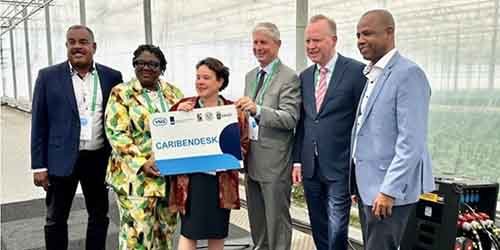
For an additional two years, Bonaire, St. Eustatius, and Saba will have access to the Association of Netherlands Municipalities’ (VNG) Caribbean Desk, which is expected to expand in scope. To assist the islands with policy, legislation, regulations, and execution, the desk was established as a pilot in June 2024. Its goal is to adapt VNG’s expertise and offerings to the Caribbean Netherlands’ specific needs. Public institutions have so far gotten assistance with policy and execution, especially in the social and legal spheres. Additionally, the islands have been more involved in consultations and implementation tests of new laws and regulations. The VNG intends to develop a legal network, modify more of its goods for Caribbean usage, and promote collaboration and knowledge exchange with municipalities in the European Netherlands as part of the extension. Additionally, the VNG is collaborating with the Caribbean Exchange Facility to establish a more long-term relationship with the Ministry of the Interior and Kingdom Relations. The VNG claims that the tasks facing Bonaire, St. Eustatius, and Saba will also benefit from the competence of European Dutch municipalities. The Ministry of the Interior and Kingdom Relations provides funding for the Caribbean Desk. VNG
- October 17, 2026
Saba, St. Eustatius, and Sint Maarten Sign Agreement to Explore Shared Legacy of Slavery
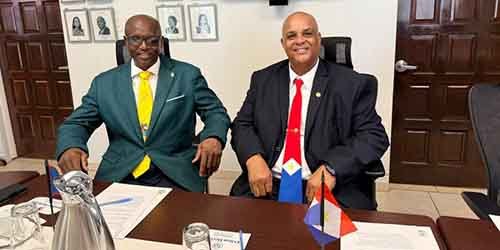
On Friday, October 16, 2026, three Dutch Caribbean governments signed a Memorandum of Understanding (MoU) for the “Slavery Past Action Agenda: Genetic Legacies of Slavery and Poverty of Saba, Sint Eustatius, and Sint Maarten.” This was a formal step toward discovering their shared history. Commissioner Eviton Heyliger signed for the Public Entity Saba, Minister Melissa Gumbs on behalf of the Government of Sint Maarten, and Commissioner Reuben Merkman for the Public Entity St. Eustatius. The agreement confirms the three governments’ dedication to promoting scientific studies connected to genealogy throughout the islands. Documenting ancestral histories and expanding knowledge of the islands’ entwined past are the goals of the project. It aims to assist descendants in tracing their ancestry and family history through oral histories, digital archives, and genealogical research. The governments intend to collaborate with academic institutions and research centers, promote community involvement in the study, and preserve the islands’ common history for future generations. The signing marks a significant step forward in regional cooperation among the three islands. PES
