
 Saba News News and Information from Saba Island, Dutch Caribbean
The Saba Conservation Foundation (SCF), in partnership with the Public Entity Saba and the Saba Foundation for the Prevention of Cruelty to Animals, carried out a decisive invasive species management project to make progress in protecting the island’s unique native wildlife.
Saba’s remarkable biodiversity, including globally significant red-billed tropicbird breeding colonies and the endemic black iguana, had been under pressure from non-native predators. Invasive species such as rats, feral cats, and green iguanas had become significant threats to the island’s biodiversity. These animals were not native to Saba and caused profound ecological harm by preying on native wildlife, competing for critical resources, and disrupting natural processes.
Rat bait stations
Rats, introduced to Caribbean islands centuries ago via human activities, ate the eggs and chicks of ground-nesting birds and had a significant impact on local bird populations. On Saba, rats had posed a threat to the globally significant nesting colonies of Red-billed tropicbirds, whose reproductive success is essential for maintaining healthy ocean food webs and coastal ecosystems.
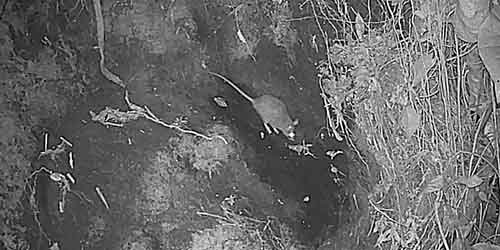
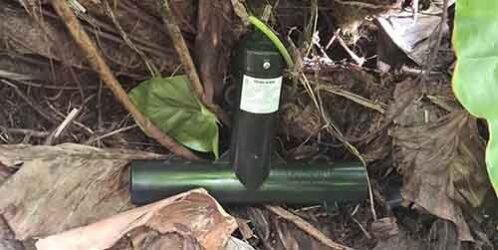
SCF conducted pilot testing of top-loaded T-shaped rat bait stations, modifying the design to accommodate the relatively large size of rats on Saba. The pilot testing demonstrated that the stations were effective, environmentally responsible, and suitable for Saba’s terrain and weather conditions. Chocolate-flavored bait proved most attractive, while coconut and flavored meat baits were secondary preferences. Monitoring confirmed no significant non-target vertebrate interactions, with only minor interference from hermit crabs. These results indicate that the bait stations can be deployed safely in sensitive areas. However, sustained deployment and continuous monitoring are required to achieve a measurable ecological impact and reduce rat populations meaningfully.
Feral cat monitoring
Feral cats also threaten these tropicbirds. These roaming predators hunt birds, anoles, and other small animals, and research documented their direct impact on red-billed tropicbird breeding colonies. Cats and rats were linked through a predator-prey relationship: while both species preyed on tropicbird eggs and chicks, cats also preyed on rats. Addressing only one invasive species at a time would not have achieved the desired effect.
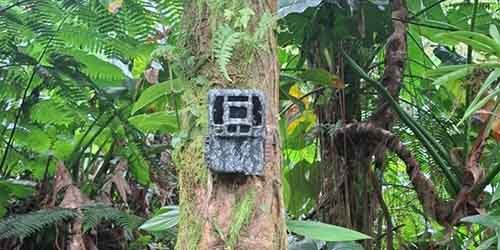
In December 2024, SCF deployed 12 motion-activated camera traps across selected monitoring sites, covering a variety of habitats including dry forests, rainforests, and cloud forests. Camera trap data confirmed that feral cats were widely distributed across the island, including sensitive ecological areas and Important Bird Areas (IBAs). While SCF was responsible for camera deployment and data collection, cat trapping was carried out in collaboration with the Public Entity Saba. Limited trapping efforts revealed trap shyness and aversion behaviors, indicating that short-term or intermittent interventions are insufficient to reduce populations. The findings highlight the need for increased trapping intensity, continuous monitoring, and dedicated personnel to ensure effective long-term management.
Ecological significance and next steps
The data collected under this pilot phase provides a baseline for invasive species populations on Saba and underscores that these species continue to threaten native wildlife, including nesting seabirds such as the red-billed tropicbird.
The project demonstrates that locally adapted management strategies can be effective and environmentally responsible, but ongoing efforts are critical to reduce invasive species pressure, protect native wildlife, and maintain the island’s ecological resilience.
This invasive species initiative was part of a broader commitment to biodiversity conservation on Saba and in collaboration with the NEPP: Nature and Environment Policy Plan – protecting nature, reviving resources, and sustaining our island.
SCF
